Crucial SEO Updates for 2025 and Beyond
When it comes to SEO, a lot has changed in 2025, from AI-powered results to community search results. Despite the fast evolution of SEO, one thing remains true: SEO is a long-term investment into your brand.
In a recent blog, we shared how you can Elevate Your SEO Strategy to Stay Ahead of the Game, and we’re here to build on that and show you what’s still important, what’s changed, and what that means moving forward.
Important Foundations of SEO
Let’s start by brushing up on the foundations to understand what remains relevant and what good SEO relies on.
1. Align your keywords with what your brand stands for.
Keywords should reflect your purpose and values. If there’s a mismatch between your brand voice and keywords, it might result in your content feeling inauthentic.
2. Understand your audience, their behaviours, and the user journey.
What your audience is searching for is a small part of the bigger picture. Understanding why they search and how they move down the marketing funnel will enable you to create content that meets them at each stage.
3. Map and track your digital channels.
Analysing and reviewing tactics can identify what’s really driving traffic.
4. Set clear business goals.
By doing so, marketing specialists like Red Herring Digital can identify the most effective keywords for your brand.
SEO’s AI evolution
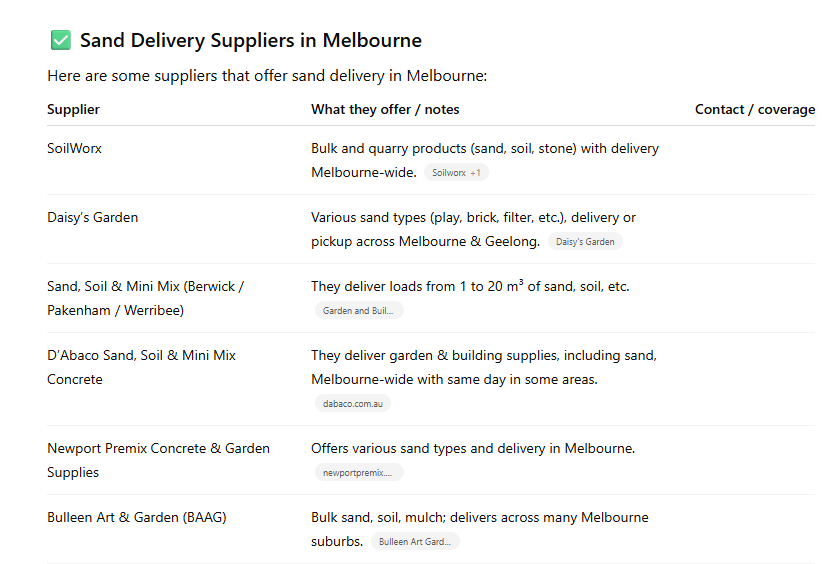
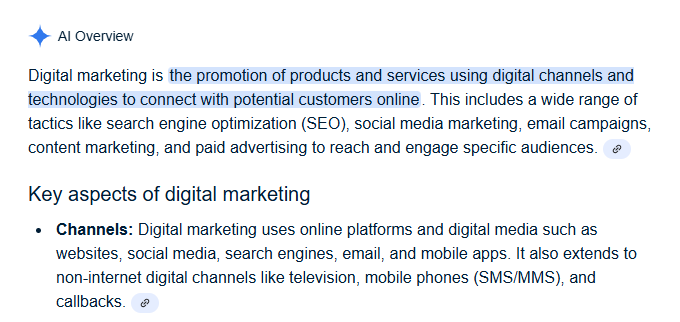
We are beginning to see AI reshape how search engines deliver results, and with this change, also how we should be optimising for them.If you’ve recently looked something up on a search engine, you may have noticed that at the top of the results is an AI-powered snippet related to the search. What we know is that AI-driven answer engines like Google and ChatGPT are using web content to provide these summaries and cite the brand as the source of information.
This is part of an emerging practice known as Generative Engine Optimisation (GEO), where brands are optimising their content for visibility and credibility within these AI tools so that their information is selected and cited in the snippet.
Where GEO differs is that it focuses on optimising content for its contextual meaning, factual authority, and structural clarity for AI models to effectively understand and use it to generate reliable and valuable responses.
Answer Engine Optimisation takes this one step further, where brands are creating content to be directly cited and featured in answer-based search results like AI Overviews, voice assistants (Siri & Alexa), and chatbots like ChatGPT. The goal of AEO is to provide the answer in a zero-click search, thereby building brand authority without leaving the search page.
What does this mean for your content? A few things.
- Adapting to these advancements early is crucial to not being left behind.
- Focus on Semantic SEO to ensure your website content aligns with the meaning and intent behind queries, rather than just using specific keywords.
- Create content that matches users’ goals (learn, compare, or buy)
- Ensure your content is structured clearly with headings, subheadings, and bullet points to help AI tools understand your content.
- ChatGPT has recently started including UTMs in its URLs, meaning you can now measure traffic that comes from AI-generated answers.
PR Links: What is it and what you need to know
Good SEO doesn’t work in a silo. For it to be successful, it needs multiple sources like blogging, social media, analytics, PR links, content marketing, and guest posting, as well as a well-structured and high-performing website.
In particular, PR links can significantly boost your brand’s credibility and reach. What are PR links?
As the name suggests, PR links are backlinks gained from reputable news outlets, magazines, and other high-authority sources. These features are earned through public relations efforts and can boost SEO efforts, as they essentially serve as endorsements from these brands, signalling to search engines that your website, product, service, or brand is credible and trustworthy.
These can have a massive impact as they enhance SEO and search engine rankings, as they are viewed as votes of confidence from authoritative sources. Additionally, they help your brand build authority simply by association. Finally, they increase visibility by giving you access to the wider audience of the media outlet, which in turn drives traffic to your site.
But what about guest posting? While guest posting remains important, the goal should be to prioritise strategic visibility, favouring quality over quantity and earning authority as a leader in your space.
SEO for e-commerce brands in 2025
When it comes to e-commerce brands, website structure and content organisation are everything. Further, your SEO can only be as good as your website’s design and user experience (UX).
With easy navigation, clear written content and structure, descriptive product pages, and relevant internal linking, you can help not only your website visitors but also search engine crawlers to explore your site.
Google Ads and social media can enhance your SEO efforts by strengthening your brand visibility. How are they able to do this? Google Ads offers exposure for certain keywords, allowing you to test which convert before investing in organic search. Social media drives engagement and traffic to your website, which can indirectly improve your SEO.
While SEO is the foundation for long-term growth, it is only part of a strategy. Boost this with other tools at your disposal, like Google Ads and social media campaigns, to accelerate growth.
Is AI killing SEO or making it smarter?
The rise of generative AI tools like ChatGPT is changing how people are searching for and consuming information. Despite this, SEO is far from dead. It remains essential for driving organic traffic, building trust, aligning your brand to your products, services and audience behaviour, and ensuring long-term visibility.
Optimising for AI and answer engines (AEO, GEO) should be seen as an extension of SEO practices, not a replacement. AI can be used as a complementary tool to SEO efforts, but won’t replace the need for optimised and authoritative content, as well as a strong website structure.
Although AI search traffic is expected to continue growing, it still represents a small share compared to Google Search. Therefore, neglecting core SEO practices can carry significant risks
If you’re wondering whether your business still needs SEO services, the answer is yes. While AI tools are changing the way we search, SEO forms the basis of online visibility. Achieving meaningful results takes time, persistence, and a well-informed strategy. That’s why it’s important to have an SEO expert in your corner, keeping ahead of industry trends while optimising your brand for traditional search engines and AI-powered discovery.
New SEO terms you should know
- AI Ads / Generative Ads: These are generated or optimised via AI, often pulling content from top-ranking pages.
- AI SEO / Generative SEO: Combines traditional SEO practices with AI-generated content or optimisation.
- Automated A/B Testing: AI tools test meta titles, descriptions, or headings for CTR impact.
- LLM (Large Language Models): E.g., ChatGPT, Bard, LLaMA; used for generating SEO content.
- LLMO (Large Language Model Optimisation): These optimise content specifically for LLMs to ensure AI-generated content ranks and converts.
- Natural Language Processing (NLP): Help understand how search engines interpret content semantically.
- Semantic SEO: Optimise for meaning and context rather than just keywords; AI excels here.
- Search Intent Optimisation: Ensures content matches user intent, often guided by AI insights.
- Predictive SEO: Using AI to predict trends, keyword opportunities, or traffic shifts.
- SERP Features Optimisation: Use AI to optimise for snippets, People Also Ask, and featured snippets.
SEO is evolving. It’s becoming broader and smarter, and your brand’s success will depend on your integration of emerging trends and technologies. The brands that will thrive in this new era are those that leverage AI without losing authenticity. Are you ready to be one of those brands?
It’s time to leverage the power of your brand across digital channels. Book a strategy session with Red Herring Digital to discover the best angle to position your business to reach aligned customers.